Start with a question above. The prepared answer and its sources will appear here.
LAVA / UNDERGROUND ENGINEERING INTELLIGENCE
Understand corrosion.
Focus your next investigation.
Underground conditions shape how rock bolts corrode. LAVA combines machine-learning predictions with source-linked AI explanations to help engineers plan more informed inspection and maintenance.
Research-led modelsTraceable explanationsEngineering review
Explore a synthetic case. See the evidence behind the answer.Illustrative support geometry
01 TRY LAVA
Ask. Inspect. Follow the source.
Start with the stored result below, then choose a question. Synthetic case · prepared answers · no live model calls.
Static branchNot triggered
83.83%
Remaining reserve Screen: 66%
Ductility branchReview flag
58.70%
Remaining reserve Screen: 70%
Stored response by age
Static reserveDuctility reserve70% ductility screen · dashed
1,000 chloride perturbations per case. Shading: P2.5–P97.5 input response; smoothed for display, not a calibrated confidence interval. Cards retain raw model values.
Flags stay attached to the original results.66% static screening · 70% provisional ductility screening
LAVA / FIELD NOTES
What would you ask next?
Choose a question about SYN-03 at 437 days. Open a source to inspect the evidence behind the answer.
Continue exploringOpen the full Dashboard Compare the other synthetic cases See how the system works
THE OPERATIONAL VIEW / FROM REGION TO RECORD
See where to look.
Then inspect the evidence.
A map gives a review team a shared starting point. Locate a region, compare its screening results and follow the records behind a concern.
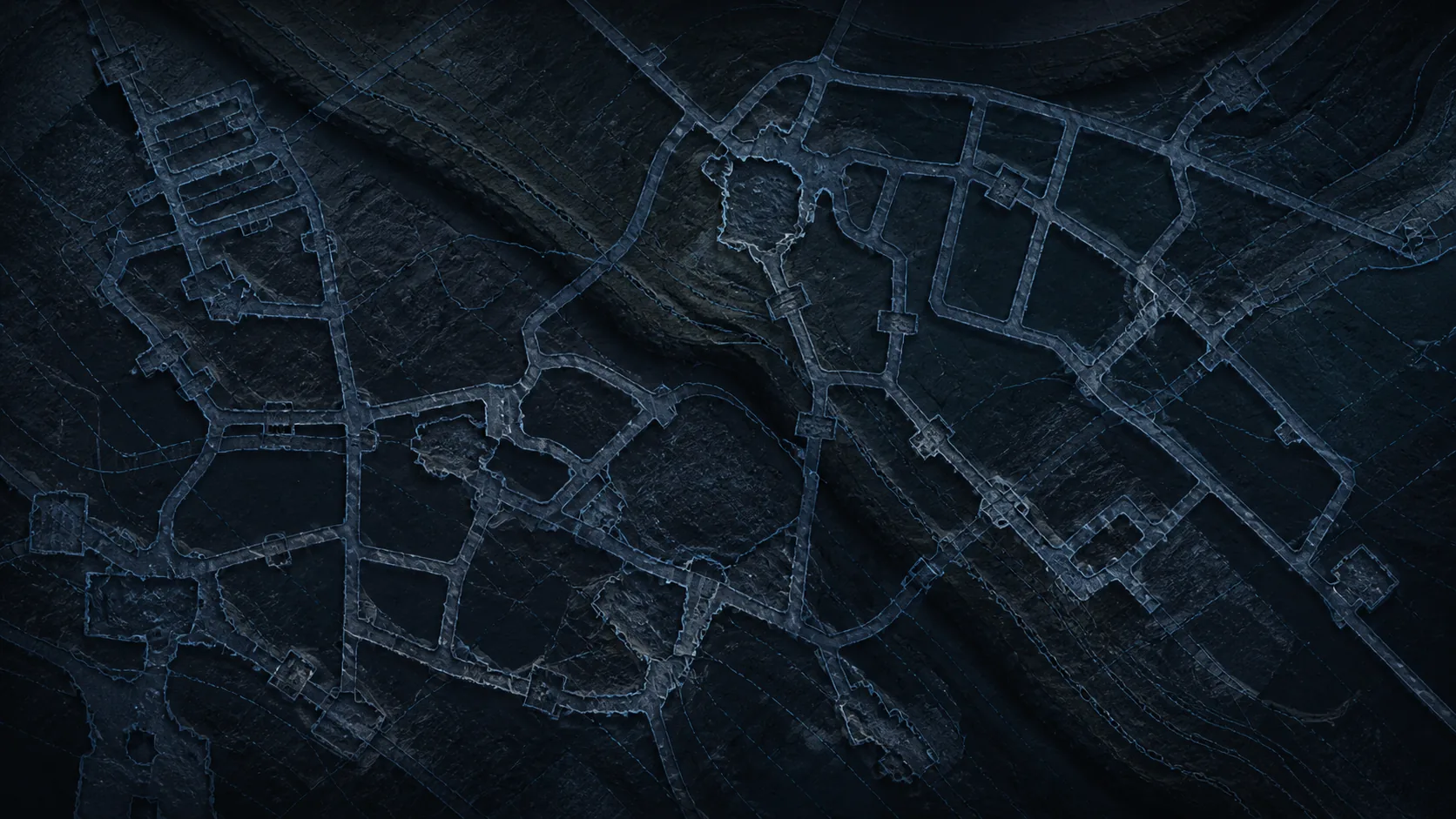 Region B1 / SYN-03Inspect the screening result Synthetic base map · open the Dashboard for the heat layer
Find patterns worth investigating.
Explore how screening severity differs between synthetic regions. Switch between points and the illustrative heat layer, then select a region to inspect its numbers.
Keep context close to the result.
Move from the map to stored trajectories, compare cases and inspect source records. The aim is to reduce the effort spent assembling an engineering review.
Build towards a site-specific risk view.
A production risk map would also need verified asset locations, exposure and consequence criteria, inspection history and engineering approval. These are inputs to a pilot, not capabilities demonstrated by this synthetic map.
SPATIAL CONTEXT / INTEGRATION CONCEPT
Give the result
a place in the picture.
Connect a support-level question to its surroundings. Explore how a future digital-twin integration could bring records, assessments and spatial models together.
Explore the 3D scene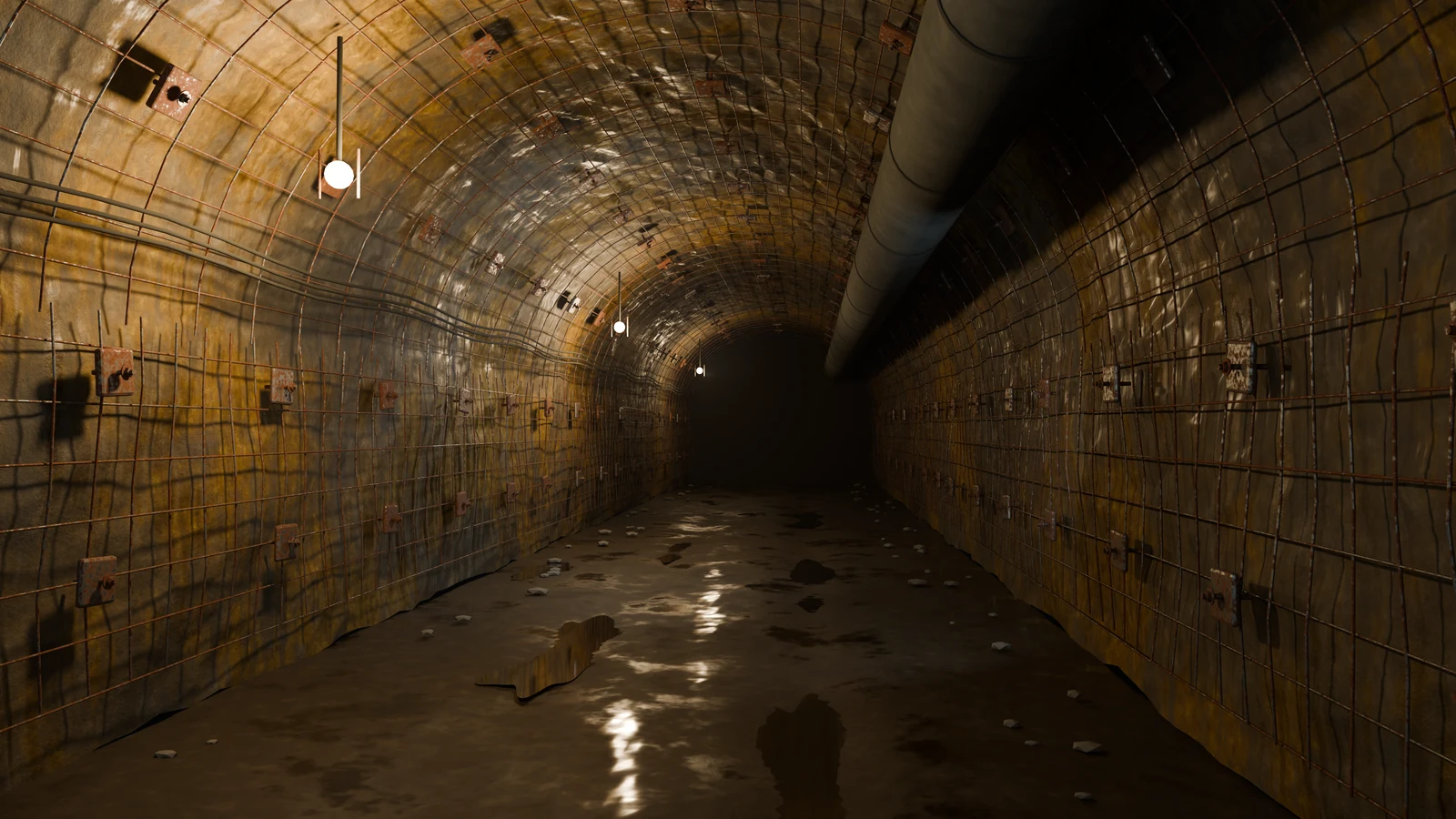
02 THE ENGINEERING QUESTION
Underground conditions change.
So does corrosion.
Rock bolts reinforce the ground around underground excavations. Over time, corrosion can eat away at the steel and change how it carries load and deforms.
Water chemistry, geological conditions, material and exposure time all matter. Two supports of the same age may face different conditions—and need different attention.
LAVA brings those conditions into a machine-learning assessment, then uses an AI agent to make the results understandable and traceable. It helps an engineer ask: where should we look more closely, and what evidence supports that choice?
A date tells you when to inspect.
Regular inspection and maintenance schedules provide a baseline. A calendar alone, however, does not explain how exposure and degradation differ across supports.
Evidence helps you decide where to focus.
Combine predicted corrosion-related changes with records and engineering review. Use that context to investigate concerning conditions and assess whether maintenance effort is being directed to the right places.
03 HOW LAVA WORKS
From underground conditions
to a maintenance conversation.
Machine learning estimates corrosion-related changes. The AI agent explains them. Your engineering team decides what to do next.
Describe the environment
Bring together water chemistry, geological context, support material and time in service. These describe the conditions around the rock bolts.
Predict corrosion-related change
Research-trained models estimate how corrosion affects the steel’s section, strength and ability to deform. This turns environmental and material inputs into results an engineer can inspect.
Ask what the results mean
LAVA Copilot explains the model outputs, retrieves relevant records and documents, and links back to its sources. It also points out missing evidence and questions that still need investigation.
Plan a targeted response
The engineer combines the explanation with inspections and site requirements to decide what to investigate or maintain. The aim is to put effort where the evidence suggests it is most useful.
04 WHY THIS MATTERS
More focused maintenance.
Better-informed risk review.
The goal is to help teams move from a schedule alone to a schedule informed by the condition of their supports.
Focus resources where they matter.
Help teams identify where closer inspection is warranted and assess opportunities to avoid unnecessary intervention.
Bring concerns into view.
Highlight predicted degradation that deserves attention, so engineers can investigate it alongside observations before deciding on a response.
Spend less time assembling the story.
Let the agent bring together model results and supporting documents, with sources available for the reviewer to check.
These are the intended benefits to test in a site-specific pilot. The research prototype has not yet demonstrated maintenance cost savings or risk reduction in operational use.
05 FROM DEMONSTRATION TO YOUR WORKFLOW
Start with the question.
Build around your evidence.
A useful pilot begins with your engineering problem and the records you already have. Together, we can define what needs to be demonstrated.
Map the workflow.
Identify the review task, the people involved and the information that is difficult to bring together.
Establish the data fit.
Review record types, quality and permissions. Agree on the site-specific assumptions and evidence gaps.
Test something useful.
Define a limited prototype or retrospective study, with agreed measures of traceability, review effort and decision support.
LET’S TALK ENGINEERING
What would make this
useful to your team?
Bring a workflow, a difficult question or a set of records.
Let’s explore where an evidence-led tool could help.